Transformative Catalysis for a Sustainable, Circular and Resilient Future
Advancing innovative catalytic technologies for renewable energy,
circular carbon use and resilient chemical production
circular carbon use and resilient chemical production
Catalysis and sustainable processes
at the University of Messina
About CASPE
 The Laboratory of Catalysis for Sustainable Production and Energy (CASPE) is a research centre for heterogeneous catalysis and sustainable chemical processes, hosting the Industrial Chemistry group of the Department of Chemical, Biological, Pharmaceutical and Environmental Sciences (ChiBioFarAm) at the University of Messina, Italy.
Established through a collaboration between the University of Messina, the Interuniversity Consortium on the Science and Technology of Materials (INSTM) and the European Research Institute of Catalysis (ERIC aisbl), CASPE brings together expertise in catalytic materials, reaction engineering and sustainable process development.
The research group, led by Professors Gabriele Centi and Siglinda Perathoner, comprises approximately 10 professors and researchers and 20–30 postdoctoral researchers and PhD students. Its activities span fundamental and applied catalysis, from materials design and mechanistic understanding to reactor engineering, process development and sustainability assessment.
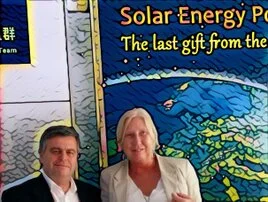 The group of catalysis has many established international collaborations and has coordinated the EU Network of Excellence on catalysis IDECAT, (from which ERIC aisbl is stemming), besides many other large EU projects, including the ERC Synergy project SCOPE and the new ERC PoC on SOLAR-H2.


Our vision: Beyond conventional catalysis
Catalysis is central to the transition towards sustainable energy and chemical production. However, meeting the challenges of decarbonization, resource efficiency and industrial resilience requires moving beyond conventional approaches developed primarily for thermal catalytic processes.
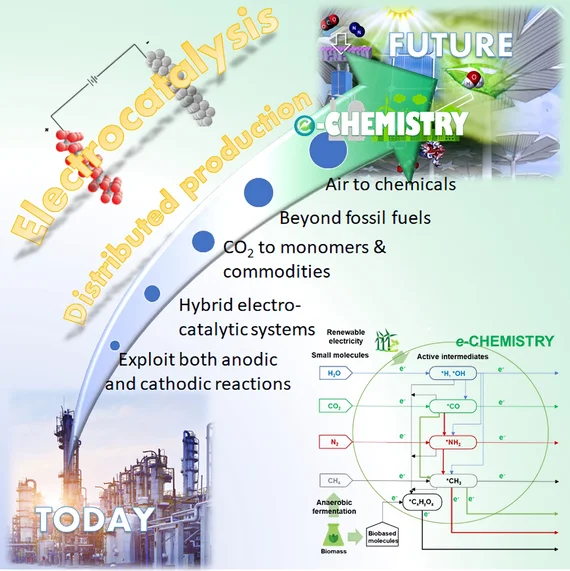
CASPE explores emerging catalytic concepts and unconventional reaction pathways, with particular emphasis on photo-, electro- and plasma-catalysis. Our research combines fundamental understanding with innovative materials, reactor architectures and process concepts to unlock new opportunities for sustainable chemical transformations.
Our long-term vision is to enable a new generation of chemical technologies based on renewable energy, circular resource use and electrified processes. These technologies can support the transition from centralized, fossil-dependent production towards more distributed, flexible and resilient industrial systems, while minimizing environmental impacts and resource consumption.
Our research
Solar-driven chemistry and energy
Developing catalytic materials, artificial photosynthetic systems and solar-driven processes for renewable fuels and sustainable chemical production.
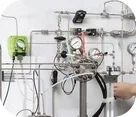
Electrification of chemical processes
Exploring electrocatalysis and innovative electrified reactors to enable the direct use of renewable electricity in chemical manufacturing.
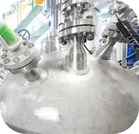
Carbon circularity and sustainable production
Developing catalytic routes that reduce dependence on fossil resources, promote carbon recycling and enable more resource-efficient production systems.
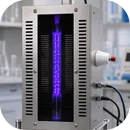
Advanced and unconventional catalysis
Investigating emerging reactivity concepts, particularly at the interface of photo-, electro- and plasma-catalysis, and developing new approaches to understanding catalytic mechanisms beyond conventional thermal catalysis.
From materials to processes
CASPE adopts an integrated, multidisciplinary approach connecting fundamental catalysis with technological innovation.
Our expertise encompasses the synthesis and advanced characterization of catalytic materials, catalytic testing, reaction mechanisms and kinetics, catalyst and reactor engineering, process development and sustainability assessment.
By combining these capabilities, we aim to translate scientific discoveries into technologies capable of supporting a low-carbon, circular and resilient chemical industry.
European leadership and international collaboration
CASPE has an established record of coordinating and participating in major European research initiatives and maintains an extensive network of international collaborations.
The group coordinated IDECAT, the European Network of Excellence on catalysis, which contributed to the establishment of ERIC aisbl. ERIC is an international non-profit organization based in Brussels, Belgium, dedicated to advancing research and innovation in catalysis and nanostructured catalytic materials.
From 2001 to 2009, CASPE was one of the three associated laboratories of ELCASS (European Laboratory of Catalysis and Surface Science), together with CNRS and Université Louis Pasteur in France and the Fritz Haber Institute of the Max Planck Society in Germany.
Our European research activities include the ERC Synergy project SCOPE and the ERC Proof of Concept project SOLAR-H2, alongside numerous other collaborative projects.
Solar HUB
Solar HUB is a new initiative aimed at advancing research and innovation in solar-driven chemistry and energy technologies. It brings together complementary expertise to accelerate the development of sustainable catalytic solutions and support the transition towards renewable energy-based chemical production.

Sept. 27th, 2026