Research & technology
Major achievements
Research and technological achievements
The SCOPE project can be considered a success story, not only in terms of research results and other lasting activities, summarized below, but especially in its ability to open new research directions and to transfer ideas into innovation. The scientific impact can be demonstrated by the many publications supported by the project (over 200, as listed in the Portal) and the numerous high-impact dissemination activities, as evidenced by the high number of plenary/keynote/invited lectures (over 270; several additional oral and poster presentations were given, but not listed). They were listed in the periodic reports (RP1-RP5). Only a selection of them is given in the Dissemination Table.
Thanks to the SCOPE project, the area of plasma-catalysis and beyond (e.g., using renewable energy sources to drive chemical conversion of small molecules) is now a consolidated frontier area, with the project pushing research in extending to novel directions and applications, new ways to mechanistic understanding (including radically new approaches), and innovations. Remarkably, a significant number of Proof of Concept (PoC) projects (3) and spinoff companies (4) stemming from the project (they were described in RP5), as well as many national/international projects originating from ideas and research concepts generated during the project. Additionally, SCOPE also generated three ERC SyG submissions. Furthermore, many national and international projects were based on the results of the SCOPE project (over 25 in total, with a follow-up budget of over 22 M€). A selection of them is presented in RP5.
Additionally, the four PIs received numerous awards for SCOPE project activities and gave extensive lectures at many conferences. They were listed in the periodic reports (RP1-RP5). Only a selection of them is given in the Awards Table.
A book co-edited by the four PIs on plasma processes for N2 fixation, various special issues of journals, and conferences organized by the four PIs in the frame of SCOPE activities are further lasting activities connected to the project (see RP5). The PIs edited three special issues of high-IF journals.
Last but not least, a large number of researchers and young scientists were during the SCOPE project. An important action concerns the realization of a joint international Doctorate (ACCESS - Advanced Catalytic Processes for using Renewable Energy Sources), stemming directly from the ERC Synergy SCOPE. Various PhD students spend mobility periods in other PIs' labs.
The project was organized into six work packages (WPs): WP1 (Identify the mechanisms of controlling the selectivity), WP2 (Surface-confined plasma ), WP3 (Fast-modulated operations in the presence of plasma), WP4 (Advanced processes for direct conversion of target small molecules), WP5 (Intensified process-sustainability opportunities), WP6 (Coordination and Dissemination).
A limited selection of main research and technological achievements is listed below:
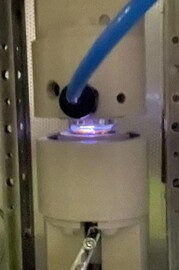
- cPI (G. Centi, UNIME): This unit, in addition to coordinating the project, was involved in various tasks, mainly related to WP1, WP2, and WP4, and published about 50 papers. Among the many relevant scientific achievements, can be mentioned i) a new concept of DBD plasma-catalytic reactors for non-oxidative coupling of methane; ii) the analysis of the synergy between plasma and light in CH4 upgrading using the optimized version of DBD planar reactor; iii) benchmarking of plasma vs electron and photocatalytic reactions; iv) the design of a process for splitting of CO2; v) novel improved technology for N2 conversion to NH3 in plasma-electrocatalytic conditions; vi) a new non-thermal plasma double dielectric barrier discharge (DDBD) reactor with a water-circulating ground electrode; vii) understanding of the role of plasma-emitted photons in enhancing CO₂ conversion in plasma-catalytic systems.
- PI1 (A. Bogaerts, UANT) contributed to almost all WP and published nearly 90 papers. Most activities focused on modeling plasma chemistry, progressing from 0D chemical kinetics models to fully coupled 2D models of plasma-based CO2 splitting, dry reforming of methane (DRM), NOx production from air plasma, and NH3 cracking, as well as DFT simulations and models of plasma-catalyst interaction. The time-dependent behavior of plasma chemistry was investigated, and various advances, such as post-plasma quenching and a post-plasma carbon bed, were developed through experiments informed by all modeling insights. Additionally, in cooperation with other PIs, the performance of plasma photocatalysis and techno-economic and life-cycle assessments (TEA/LCA) of plasma-based NH3 synthesis, CO2 splitting, and different plasma-based methane reforming technologies were conducted.
- PI2 (E. Rebrov, UWAR) and I3 (V. Hessel, UWAR) contributed most to WP1, WP3-WP5, and published over 70 papers, several jointly. Among the several achievements: i) several plasmonic and semiconductor catalyst formulations and ferroelectric thin films were developed; ii) a novel method for detecting plasma species using tunable diode laser absorption spectroscopy (TDLAS); (iii) novel plasma reactors for surface-confined plasma, nanosecond plasma jet, two electron-temperature plasma, one-jet plasma (stagnant later), two-jet plasma, and microbubble plasma; iv) fundamental electrical & chemical-engineering assessment of the plasma microbubble gas-liquid system; v) NOx formation in single-jet stagnant layer reactor, NOx formation in two-jet convective flow reactor, NH3 and NOx formation in plasma bubble reactor; vi) TEA and LCA assessment of small-scale distributed Haber-Bosch and plasma-assisted NH3 supply chains, CO2 splitting, as well as syngas production; vii) Environmental, Social, and Governance (ESG) metrics for plasma technologies; viii) Review on the role of the entirety of industrial bulk-chemical separation technologies for fostering the economic position of plasma chemistry.
Novel methodologies, inter-disciplinary developments and knowledge transfer
Several novel methodologies, including plasma reactors to maximize synergy with a catalyst, to control secondary reactions, and to interact with other energy sources such as light or an electrical field, were developed, together with various materials for advanced electrodes, as well as the physico-chemical and engineering modeling of the processes and reactors. Additionally, new assessment methodologies for the plasma processes were developed.Examples of such developments include:
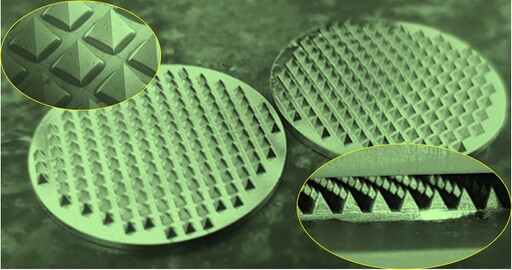
cPI: i) new type of reactors to control side reactions, maximize microdischarges to improve energy efficiency, and interaction with other sources of energy (a DBD planar plasma reactor, a plasma jet reactor for direct NH3 synthesis from N2, a flow-through photoreactor to couple with plasma, a porous stainless steel (PSS) tube as the internal electrode in a coaxial tubular DBD reactor, a double dielectric barrier discharge reactor, etc.); ii) new type of (catalytic) materials for coupling with plasma (doped TiO2 coatings, nanoporous carbon layers with modulated surface morphology for surface-confined plasma, etc.).
PI1 developed many novel methodologies, mainly in modeling, by developing the very first (worldwide) fully coupled, self-consistent models with predictive character for various plasma reactors and gas mixtures, for plasma reactor design optimization and performance improvement, and also tested/validated experimentally, as well as developing fully coupled models for plasma-catalyst interactions. All these models can describe both spatially and time-dependent plasma behavior. This work is highly interdisciplinary, connecting chemistry, physics, and engineering with economic and environmental aspects (TEA/LCA), through intensive collaboration with I3. Knowledge and technology transfer did not only occur within the scientific community (through many papers and invited talks), but also to industry, through the founding of 4 spinoffs (D-CRBN, Optanic, Tales of Land, and Atomic16) and the Electrification Institute at UAntwerpen.
PI2 and I3 developed, among others, i) a micro-dielectric barrier discharge (micro-DBD) reactor for CO₂ decomposition, characterized by a local intensification of the electric field within the discharge gap; ii) a new methodology for analysis of the time-varying gas species concentration and temperature profiles produced during plasma reactions by Tunable Diode Laser Absorption Spectroscopy (TDLAS); iii) a new method for determination of spatial concentration profiles under transient operations; iv) a new approach for studying plasma-induced microbubble behavior and mass-transfer intensification; v) a new dual submerged plasma micro-jets for nitrogen fixation; vi) an innovative approach to recover nitrogen and ammonium ions from urea (urine); vii) a new pretreatment of plant biomass waste for better resource extraction: conventional technologies versus non-thermal plasma and microwave; vii) new methods for assessment, including metrics, of plasma technologies compared to alternative routes; viii) using own microplasma technology for the liberation of phytonutrients from waste biomass, also in the context of human space exploration. Founding action for NFarm company launch (N = nitrogen).
Most significant achievements
Over 200 publications were realized, with acknowledgment to the SCOPE project, in addition to many dissemination activities (over 200 plenaries, keynotes or invited), interactions with stakeholders (including the realization of three Proof of Concept (PoC) projects, four spinoff companies and several follow-up projects with the participation of several companies, and well as three new ERC SyG applications. Below is a list of the five most significant achievements:
1) J. Osorio-Tejada, M. Escriba-Gelonch, R. Vertongen, A. Bogaerts* and V. Hessel*, CO2 conversion to CO via plasma and electrolysis: a techno-economic and energy cost analysis, Energy Env. Sci., 17, 5833-5853 (2024) (* shared senior authors, IF: 30.8). This high-impact paper shows the superior economic performance of plasma-based CO2 conversion, compared to electrolysis, and demonstrates the high industrial potential, at the plant level, due to major improvements by post-plasma carbon beds, developed experimentally by PI1. This fits well with PI1's activities in founding a spinoff on plasma-based CO2 conversion (D-CRBN), which acquired major funding and is scaling up the technology. Together, PI1 and I3 published 4 techno-economic and life-cycle assessment (TEA/LCA) papers in high-IF journals (also on plasma-based NH3 synthesis and different plasma-based methane reforming technologies). This collaboration demonstrates the very interdisciplinary character of SCOPE and the true synergy.
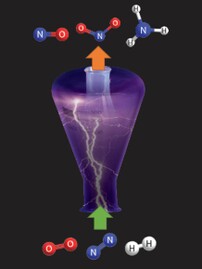
2) V. Hessel, A. Bogaerts, G. Centi, E. Rebrov, N. V. D. Long, Book editors: Plasma-Assisted Nitrogen Fixation for Sustainable Process Industries, John Wiley & Sons (2026). ISBN:9781394283019. Plasma-assisted nitrogen fixation is a sustainable, electrified alternative to the Haber-Bosch process, utilizing renewable energy to convert nitrogen (N2) and oxygen (O2) or hydrogen (H2) into fertilizer (NOx/ammonia). It offers mild reaction conditions and enables decentralized, small-scale production, potentially lowering the carbon footprint compared to traditional high-pressure methods.
3) A Bogaerts, G Centi, V Hessel, E Rebrov, Perspectives and emerging trends in plasma catalysis: facing the challenge of chemical production electrification, ChemCatChem 2025, 17 (7), e202401938. Electrification of chemical production requires the development of innovative solutions, including plasma catalysis. This perspective summarizes many years of studies and discussions conducted within the ERC Synergy project SCOPE, dedicated to the above aspects. The perspective aims to offer a vision of the future for plasma catalysis and its role in facing societal challenges.
4) A Bogaerts, G Centi, V Hessel, E Rebrov, Challenges in unconventional catalysis, Catalysis Today 2023, 420, 114180. Catalysis Science & Technology has recently increased efforts to progress beyond conventional "thermal" catalysis and address the challenges of net-zero emissions and the electrification of production. Nevertheless, a more thorough gaps-and-opportunities analysis is necessary. This review analyses four emerging areas of unconventional or less-conventional catalysis which share the common aspect of using directly renewable energy sources: (i) plasma catalysis, (ii) catalysis for flow chemistry and process intensification, (iii) application of electromagnetic (EM) fields to modulate catalytic activity and (iv) nanoscale generation at the catalyst interface of a strong local EM by plasmonic effect.
5) Proof of Concept (PoC) projects and spinoff companies stemming from the project: i) cPI G. Centi: SOLAR-H2 (project 101247232, ERC-2025-POC call; ii) PI2: A. Bogaerts: ERC PoC-2022 project PREPARE (Grant agreement ID: 101081162; iii) PI3: E. Rebrov: the POC project METAHYDO, used the principle of detecting low concentrations of H2 in different gas mixtures using an IR-laser; iv) I3 V. Hessel: Initiating and facilitating foundation of FarmN Company; v) PI2: A. Bogaerts: four spinoff companies on plasma technologies (D-CRBN, Optanic, Tales of Land, Atomic16).
Breakthroughs or advances beyond state-of-the-art
All the achievements mentioned above are true breakthroughs because they have advanced the field significantly beyond the state of the art. We can list only some examples: i) the modeling activities of PI1 are worldwide pioneering, with the development of the very first truly predictive plasma reactor models, coupling all important physics and chemistry, leading to digital twins, where the models can now guide building important plasma reactors; ii) in addition to this approach, a new dimensionless engineering modelling of DBD reactors was developed, with an unified electro-chemo-fluid framework that rationalizes reactor behavior across geometries, discharge lengths, and flow rates by integrating Lissajous diagnostics, performance analysis, and adimensional modeling; this is the basis to allow scalability and exploitability of NTP plasma reactors; iii) many new type of plasma reactors have been developed, as mentioned above, including for the combination of plasma with light and electro-driven processes; iv) several new development in the plasma processes for N2 fixation, with also a significant public impact.
We believe, however, that these are specific scientific aspects, while the effective breakthrough advance of the SCOPE project wa in transforming the area of plasma-catalysis and beyond (e.g., using renewable energy sources to drive chemical conversion of small molecules) as a consolidated frontier area, with the project pushing research in extending to novel directions and applications, new ways to mechanistic understanding (including radically new approaches), and innovations.
This was internationally recognized. The four PIs received numerous awards for SCOPE project activities and for lecturing at many conferences. A book co-edited by the four PIs on plasma processes for N2 fixation, various special issues of journals, and conferences organized by the four PIs in the frame of SCOPE activities are further lasting activities connected to the project.
Additionally, these scientific breakthroughs were applied at the practice level. Remarkably, a significant number of Proof of Concept (PoC) projects and spinoff companies stemming from the project, as well as many national/international projects originating from ideas and research concepts generated during the project, with follow-up initiatives at least twice the total contribution of the SCOPE project, and the participation of many industrial stakeholders in these initiatives.
Last but not least, the educational impact: a relevant number of researchers and young scientists were trained during the SCOPE project, including the establishment of a Doctorate School (ACCESS, at the University of Messina, Italy), and all PIs participated.