PoC & spin-off
Major achievements
Remarkably, a significant number of Proof of Concept (PoC) projects and spinoff companies stemming from the project,
Proof of Concept (PoC) projects and spin-off companies stemming from the project
 cPI G. Centi: SOLAR-H2 (project 101247232, ERC-2025-POC call, 18th months from Set. 1st, 2025). Host Institution: Univ. Messina (Italy), additional beneficiary DAY ONE (Italy). The SOLAR-H2 project introduces a groundbreaking artificial tree (AT)-like technology for distributed, on-demand H2 production, designed for zero-carbon communities and off-grid applications. The innovative approach integrates photoelectrocatalysis, in which CO2 and H2O are converted into H2 and formic acid (FA) using sunlight. The latter acts as a hydrogen storage medium, enabling on-demand or continuous H2 production, even at night, via catalytic decomposition. Additionally, the system ensures a closed-loop CO2 recirculation, with minimal losses compensated by external CO2 sources, making it a highly sustainable and carbon-efficient solution. Building on the ERC Synergy SCOPE project, SOLAR-H2 aims to advance the technology to TRL 4. This will involve scaling up to a small-scale demonstrator, improving performance, and using gas-diffusion electrodes.
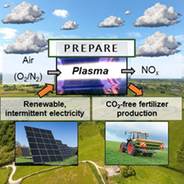 PI2: A. Bogaerts: ERC PoC-2022 project PREPARE (Grant agreement ID: 101081162, 18 months from Nov. 1st, 2022). Plasma reactors can enable sustainable, energy-efficient fertilizer production by harvesting nitrogen oxides from the air. The EU-funded PREPARE project designed three prototype plasma reactors to produce nitric acid and ammonium nitrate, using computer model predictions to test power supplies for optimal efficiency. The effects of quenching, heat recovery, preheating, gas recirculation, and sorption materials were also tested to improve chemical yields. The robustness of the reactors has also been tested in real-world conditions under varied humidity levels. The last step was analysing and recommending one of the prototypes for upscaling and potential commercialization.
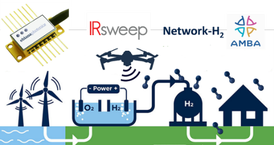 PI3: E. Rebrov. The development of quantum cascade lasers (QCLs), interband cascade lasers (ICLs), and advanced infrared detectors has significantly expanded the capabilities of optical gas sensing, offering a 2–3 fold improvement in sensitivity over traditional NIR techniques. Compared to other analytical methods such as non-dispersive gas chromatography or Fourier transform infrared (FTIR) spectroscopy, TDLAS provides superior sensitivity and faster response times. The development of a compact, lightweight, and sensitive gas sensor certainly accounts for its novelty, and if competitively priced, the sensor could readily be commercialized. In the POC project METAHYDO, we used the principle of detecting low concentrations of H2 in different gas mixtures using an IR-laser that utilizes a 2122 nm laser diode (Eblana Photonics Ltd) combined with a novel circular multipass gas absorption cell (IRsweep). The TRL level 4 (prototype testing) has been achieved at the end of this project.
  I3 V. Hessel: Initiating and facilitating foundation of FarmN Company (https://www.farmn.com.au/). I3 Hessel trained and advised FarmN’s CE, Greg Butler, on the use of plasma technology for nitrogen fixation to enable on-site, distributed fertilizer production. From there, and inspired by the sustainability efforts of SCOPE (WP5, I3), FarmN expanded its commercial scope to “Carbon Intensity and Carbon Crediting Specialists for Low Emission Fuel and Fertilizer”. As a result of SCOPE, FarmN now also offers LCA studies for clients. V. Hessel (I3) and SCOPE-postdoc Nam Ngieph Nguyen are shareholders and advisors of FarmN. FarmN is a member of the Ammonia Energy Association (AEA, https://ammoniaenergy.org/).
 PI1: A. Bogaerts: In 2021, a spin-off company was founded: D-CRBN (https://d-crbn.com/). A. Bogaerts and her postdoc (Georgi Trenchev) were co-founders and shareholders. Georgi Trenchev is now CTO. This company aims to scale up our plasma technology for CO2 conversion to CO and build larger plasma reactors, which are of interest for reducing CO2 emissions in the (petro)chemical, steel, and energy industries.
 At the end of 2022, a second spin-off company of our research group, PLASMANT, was ALSO founded: Optanic (website under construction), with A. Bogaers as co-founder, shareholder, and member of the Board of Directors. This company aims to scale up our plasma technology for the dry reforming of methane into syngas and methanol, and to build larger (atmospheric-pressure glow-discharge) plasma reactors, of interest for biogas valorization and the production of value-added chemicals. Both spin-offs were linked to SCOPE activities.
A. Bogaerts ALSO founded two further spin-offs on plasma technologies: Tales of Land (plasma technology for the destruction of PFAS) - since 2023, and Atomic16 (plasma technology for the production of SO2/SO3 upon addition of S to CO2 conversion) - since 2023.
She is a Co-founder of the Electrification Institute at UAntwerpen (since 2024)